




MASH / MASLD
Latest News
Advertisement
Latest Videos



Shorts
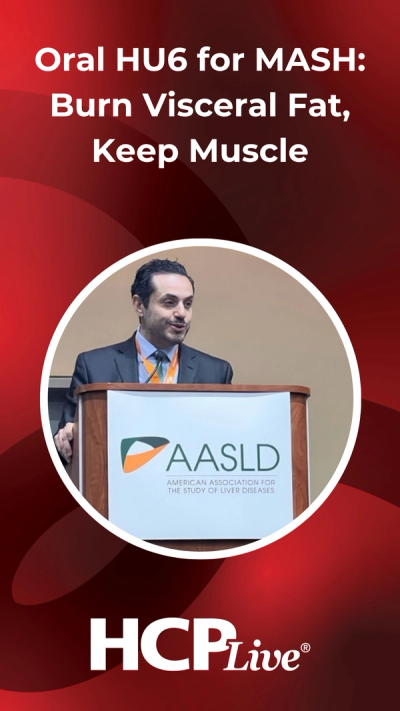
1:00
HU6 Targets Liver Fat While Preserving Muscle
a month ago
by
Mazen Noureddin, MD

1:01
MASH Therapeutic Developments to Watch in 2026
4 months ago
by
Mazen Noureddin, MD, MHSc
1:30
Liver Lineup: How Semaglutide Improves Liver Health Beyond Weight Loss
9 months ago
by
Nancy Reau, MD(+2 more)

1:46
ESSENCE and Semaglutide 2.4 mg for MASH
10 months ago
by
Arun Sanyal, MD
Podcasts



CME Content




















































Advertisement
More News
Younossi explains the growing interest in NITs for MASLD and reviews his research on their performance in age, diabetes, and obesity subgroups.

Patients with severe hypertriglyceridemia and MASLD saw reductions in fasting triglyceride and improvements in remnant cholesterol and hepatic fat.
Catch up on hepatic FDA news, expert insights on PBC and MASH developments, & more.

Nancy Reau, MD, and Kimberly Brown, MD, discuss the challenges of accurately assessing and addressing alcohol use in patients with MASLD.
Noureddin recaps recent progress in MASH therapeutic development and looks ahead to what 2026 and beyond may offer.
The Q4 recap for hepatology spotlights new AASLD guidelines, changes to CDC hepatitis B vaccination recommendations, and more.

The designation follows positive phase 2b data and FDA alignment on a phase 3 trial.
Catch up on new infant hepatitis B vaccine recommendations, liver transplant guidelines, research on GLP-1 RAs, and more.
The hepatology year in review highlights FDA approvals, MASH therapies, viral hepatitis advances, cholestatic disease shifts, and evolving clinical guidance.
The MASH/MASLD year in review highlights FDA approvals, resmetirom data, semaglutide, pemvidutide, and advances in fibrosis and noninvasive endpoints in 2025.
Positive topline results from the phase 2b IMPACT trial show statistically significant improvements in key noninvasive tests with pemvidutide.

Findings link GLP-1 RA use to reduced HCC risk in patients with type 2 diabetes, with benefits partly attributable to avoiding insulin's potential hepatotoxicity.
Catch up on new AASLD MASH guidelines on semaglutide, key research from The Liver Meeting 2025, and more.
Recent advancements in hepatology highlight new medications for metabolic dysfunction and liver diseases, promising improved patient outcomes and treatment options.
Patients with MASLD, advanced CKM stages face higher mortality and liver fibrosis, emphasizing the need for early risk assessment.
Children with MASLD were more likely to live in neighborhoods with greater socioeconomic and environmental disadvantage than those with overweight or obesity but without MASLD.
Alkhouri explains the importance of differentiating F3 from cirrhosis and the utility of different noninvasive tests for identifying these patients.
Noureddin explains HU6’s mechanism of action and phase 2 data presented at AASLD The Liver Meeting supporting its use in MASH.
Alkhouri explains findings from the phase 2 WAYFIND trial suggesting the potential of semaglutide and cilofexor/firsocostat for MASH cirrhosis.
Noureddin explains 24-week data showing significant MASH resolution, weight loss, and evidence of anti-fibrotic activity with the GLP-1/glucagon dual receptor agonist.
Alkhouri breaks down recent therapeutic progress in MASH and explains new data on resmetirom’s use in patients with compensated MASH cirrhosis.
Younossi explains the importance of patient-reported outcomes and assessing HRQoL, breaking down findings from an analysis of the MAESTRO-NAFLD trial of resmetirom.
AASLD-presented data show HCCs persist after weight or diabetes control, with a new target of fibrotic immune phenotype to prevent MASH-related complications.
Katzenstein reviews noninvasive tests used for MASH and explains her research on the ELF test’s real-world potential for predicting liver stiffness.

A post hoc analysis of the phase 2b SYMMETRY trial highlights efruxifermin’s impact on overall fibrosis burden and septa area.
Advertisement
Advertisement
Trending on HCPLive
1
TRIUMPH-1: Retatrutide Substantially Lowers Weight, BMI in Patients With Obesity or Overweight
2
Machine Learning Model Predicts Type 2 Diabetes Risk Up To 10 Years Out
3
TRANSCEND-T2D-1: Retatrutide Demonstrates Superior Weight Loss and A1c Results Versus Placebo
4
ACCESS: Aleniglipron Achieves Up To 11.3% Weight Loss in Phase 2b Obesity Trial
5