




HIV/AIDS
Latest News

Advertisement
Video Series


Latest Videos









CME Content






















































Advertisement
More News

Focusing on the management of patients with HIV, the panel provides clinical insights on treatment selection, focusing on long-acting agents.
The panel discusses strategies to predict patients who will have poor adherence to their HIV medications and how to select the best treatment options for them.
Experts on HIV provide clinical insights on testing for drug resistance prior to treatment and approaching the topic of resistance with patients.
Paul E. Sax, MD, and Sorana Segal-Maurer, MD, discuss treatment resistance in HIV and how it has changed over the years.
The panel discusses the importance of starting HIV treatment early after diagnosis and offers advice to clinical providers.
Experts on the treatment of HIV discuss how they talk with their patients about adverse effects associated with HIV regimens.
The panel offers expert perspectives on key factors that inform treatment decisions for patients with HIV.
Focusing on the evolving treatment paradigms for HIV, the panel reviews guideline recommendations for initial therapy and discusses education practices for newly diagnosed patients.
A panel of experts on HIV open the discussion with a conversation about the role of the primary care provider and advanced practice provider in treating patients with HIV.

Results from the systematic review and meta-analysis showed FMT restored the normal microbiome, reduced the risk of gastrointestinal infections, and did not lead to increased adverse events in patients with HIV.


Amid a blood shortage and continued stigmatization of HIV risk, it's hard to feel good about the FDA's delayed decision—though good may still come of it.

Stigma, and a lack of communication and awareness all inhibit HIV PrEP uptake, but digital health and new forms of PrEP could boost users.

Co-infections of HBV and HIV often lead to an increased risk of overall mortality.

The pandemic had an immediate effect on patient care, and in pivoting to adapt to the quarantine, some changes may have created potentially permanent ways to deliver health care.
In this 9-part series, we explore how the COVID-19 pandemic may permanently change health care, treatment, and research in the future.
Cabotegravir’s FDA breakthrough designation along with adaptive strategies being deployed are the biggest stories in HIV prevention this year.
Living longer because of antiretroviral therapy (ART), people with HIV (PWH) need to be counseled for age-related medical issues, and may also be eligible for newer ART. However, social determinants, stigma about the virus, and continuum of care issues remain challenges to many within the PWH population.

HIV care may help enable better treatment for HCV infectious.

David Ho, MD, likens and contrasts the pandemic to 3 other viral outbreaks and their respective responses.
A famed virologist weighs in on the country's earliest shortcomings—and how they can still be resolved today.
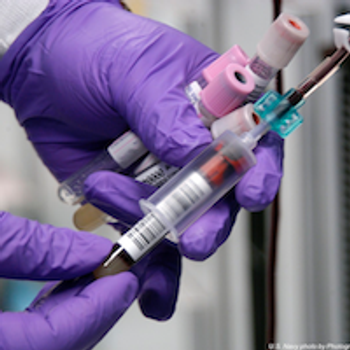
A majority of those who fall under the criteria for recommended HIV testing has not once received such testing.

The ID-Cap System represents the only ingestible event marker able to transmit digital data within the body to an external receiver without direct skin contact.
The FDA approves Descovy to reduce the risk of HIV infection through sex.
HIV patients will be allowed to switch to doravirine or doravirine/lamivudine/tenofovir disoproxil fumarate if they are virally suppressed with no prior history of treatment failure.
Advertisement
Advertisement
Trending on HCPLive
1
TRIUMPH-1: Retatrutide Substantially Lowers Weight, BMI in Patients With Obesity or Overweight
2
Machine Learning Model Predicts Type 2 Diabetes Risk Up To 10 Years Out
3
TRANSCEND-T2D-1: Retatrutide Demonstrates Superior Weight Loss and A1c Results Versus Placebo
4
ACCESS: Aleniglipron Achieves Up To 11.3% Weight Loss in Phase 2b Obesity Trial
5