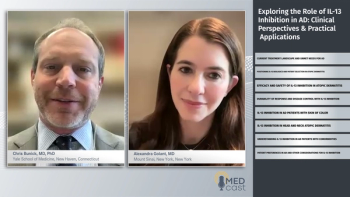
A pair of leading subject matter experts discuss the current landscape of atopic dermatitis, including unmet needs, and the role of IL-13 inhibition in the management.
A pair of leading subject matter experts discuss the current landscape of atopic dermatitis, including unmet needs, and the role of IL-13 inhibition in the management.
In this set of interviews, 6 leaders in the field of dermatology highlight their experiences at the 2025 EADV Congress.
A pair of leading subject matter experts discuss the current landscape of atopic dermatitis, including unmet needs, and the role of IL-13 inhibition in the management.

Panelists discuss whether a treatment switch would be considered for a patient with 75% improvement in atopic dermatitis, weighing the benefits of continued treatment versus the potential for further improvement with a different therapy.
Panelists discuss how they define treatment non-responders in atopic dermatitis (AD), focusing on factors such as lack of significant improvement in symptoms, inadequate response to therapy, or failure to achieve treatment goals despite proper adherence and adjustments.
Panelists discuss the limited data on atopic dermatitis (AD) treatments in patients with skin of color, highlighting findings from other studies and real-world data to better understand treatment efficacy and safety in this diverse patient population.
Panelists discuss switching from dupilumab to other IL-13 inhibitors in atopic dermatitis (AD), reviewing real-world data (RWD) on the effectiveness, safety, and patient outcomes associated with these treatments.
Panelists discuss the safety of biologics in atopic dermatitis (AD), reviewing current understanding of their safety profiles, including long-term data, adverse events, and the overall risk-benefit analysis for patients using these agents.
Panelists discuss the frequency of combination therapy use in managing atopic dermatitis, highlighting its role in enhancing treatment efficacy and addressing multifactorial aspects of the disease in their patient population.
Panelists discuss when to consider switching to another biologic or exploring a different mechanism of action in atopic dermatitis treatment, focusing on factors like inadequate response, adverse effects, or the need for more targeted therapy to optimize patient outcomes.
Panelists discuss the maintenance of treatment efficacy in the lebrikizumab clinical trial, highlighting data on sustained improvement in atopic dermatitis symptoms over time and the long-term effectiveness of the treatment.
Panelists provide an overview of the latest efficacy and safety data for IL-13–targeting therapies in atopic dermatitis (AD), including recently presented data on dupilumab, lebrikizumab, and tralokinumab, focusing on their effectiveness in symptom reduction and safety profiles across patient populations.
Panelists discuss the differences between the 3 FDA-approved IL-13–targeting agents for atopic dermatitis (AD)—dupilumab, tralokinumab, and lebrikizumab—and how these differences in their mechanisms of action might impact their effectiveness in targeting the disease and addressing various patient needs.
Panelists discuss recent guideline changes regarding advanced systemic therapy in atopic dermatitis (AD), focusing on when to transition a patient to systemic agents and when biologics should be considered for the treatment of moderate to severe AD.
Panelists discuss how treatments for atopic dermatitis impact patients' quality of life, focusing on improvements in symptoms, daily functioning, and emotional well-being with different therapeutic options.
Panelists discuss how the standard of care in atopic dermatitis (AD) has evolved with recent advances in treatment, highlighting the use of assessment tools and scoring systems in clinical practice, and compare real-world outcomes with those seen in clinical trials for AD treatments.
Panelists discuss how recent treatment approvals for atopic dermatitis (AD), including new biologics and systemic therapies, are reshaping management, and emphasize how patient factors, such as severity, comorbidities, and treatment history, guide treatment selection in AD.
Panelists discuss how to confirm the diagnosis of atopic dermatitis (AD) when in doubt, emphasizing the importance of clinical evaluation, family history, and skin testing, and share strategies for approaching adult patients with new-onset AD, including thorough patient history and targeted management.
Panelists discuss how the clinical heterogeneity of Atopic Dermatitis (AD) presents diagnostic challenges, with varying criteria for pediatric and adult-onset AD, highlighting the need for age-specific approaches to accurately diagnose and treat the condition.

Expert dermatologists share clinical pearls for providers treating patients with AD, and discuss the future of AD treatment.

Lisa Swanson, MD, PhD, highlights dermatology biologics coordinators as a resource for getting better access to JAK inhibitors.
Dermatology experts discuss the use of JAK inhibitors in clinical practice, highlighting their own experiences and use of JAKs alongside corticosteroids.
Expert dermatologists speak on shared-decision making between the patient and the provider when it comes to selecting the right therapy for AD.
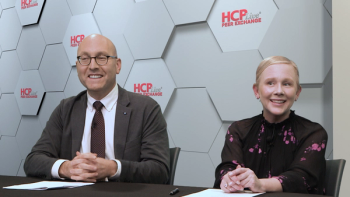
Peter Lio, MD, reviews the contraindications of JAK inhibitors in AD and approaches for monitoring patients who are prescribed a JAK inhibitor.
Alexandra Golant, MD, comments on the boxed warnings on all currently approved JAK inhibitors, as well as the commonly used treatments in dermatology that have boxed warnings.
Expert dermatologists review the safety data of the current JAK inhibitors approved for AD, highlighting adverse events and long-term safety data.
Lisa Swanson, MD, PhD, reviews the indications for ruxolitinib, abrocitinib, and upadacitinib, as well as the clinical trial data on efficacy of these JAK inhibitors when treating AD.
Expert dermatologists discuss the factors that differentiate JAK inhibitors from other AD therapies, highlighting itch scores as they relate to quality of life.
Alexandra Golant, MD; Christopher Bunick, MD, PhD; and Peter Lio, MD, comment on how targeting the JAK-STAT (signal transducer and activator of transcription) pathway with JAK inhibitors plays a role in managing AD.
Peter Lio, MD, and Lisa Swanson, MD, PhD, provide an overview of Janus Kinase (JAK) inhibitors, their pathophysiology, and their mechanism of action in the treatment of atopic dermatitis (AD).

June 1st 2022