

The latest ABCs of Dermatology explored the future potential of amlitelimab in atopic dermatitis and the potential of OX40 ligand-targeted therapy.

Christopher G. Bunick, MD, PhD, is an associate professor of dermatology at Yale University School of Medicine.
The latest ABCs of Dermatology explored the future potential of amlitelimab in atopic dermatitis and the potential of OX40 ligand-targeted therapy.
Amlitelimab was discussed in the ABCs in Dermatology podcast, with the hosts highlighting atopic dermatitis patient demographics and high disease burden.

Explore OX40/OX40L inhibition in atopic dermatitis: phase 3 amlitelimab efficacy, safety signals, and what upstream immune control could mean.

This Q&A interview highlights emerging therapies for atopic dermatitis, featuring Christopher G. Bunick, MD, PhD of Yale Medicine.
Christopher Bunick, MD, PhD, and colleagues conducted a review bispecific and trispecific antibodies in atopic dermatitis.
Late-breaking AAD 2026 trials spotlight PsA weight-loss combo, twice-yearly IL-13 dosing for atopic dermatitis, and a rapid oral TYK2 pill for psoriasis.
Chris Bunick, MD, PhD, and Lindsay Ackerman, MD, preview the 2026 American Academy of Dermatology Annual Meeting.
Hosts reveal how research, mentors, and clinic rotations spark a passion for skin disease and what makes dermatology unique.
A clip from an episode of ABCs in Dermatology showcases perspective into the personal lives of hosts Chris Bunick, MD, PhD, and Lindsay Ackerman, MD.
Experts unpack biologics, molecular know-how, and patient trust—plus key previews for the upcoming AAD Annual Meeting.

Panelists discuss the questions below in this video. Looking ahead, what are your hopes for the future of psoriasis care with targeted oral therapies like TYK2 inhibitors, and what final reflections do you have on their emerging role in clinical practice?
Panelists discuss the questions below in this video. What do we know about the therapeutic potential of TYK2 inhibition in psoriatic arthritis?
Panelists discuss the questions below in this video. ESK-001, another highly selective TYK2 inhibitor, has advanced into phase 3 trials in plaque psoriasis. How does its mechanism of action and emerging phase 2 data compare with deucravacitinib and zasocitinib, and what features might distinguish it within the TYK2 inhibitor class?
Panelists discuss the questions below in this video. How do you see emerging TYK2 inhibitors, such as zasocitinib and ESK-001, fitting into the psoriasis treatment landscape, if approved? Building on IMMpulse findings that earlier biologic use in moderate psoriasis can improve outcomes, what opportunities do you see for TYK2 inhibitors to be used earlier in appropriate patients?
What are your impressions of the Phase 2b data of zasocitinib in psoriasis, particularly in terms of Psoriasis Area and Severity Index (PASI) responses, dose-dependent effects, and tolerability? How do you see these results influencing your real-world patient selection?
It seems there is no text provided for summarization. Please provide the text you'd like summarized, and I'll be happy to help!
Next-generation TIC-2 inhibitors show remarkable selectivity, enhancing efficacy while minimizing side effects, offering insights into immune system safety.
Explore the distinct role of TIC-2 in psoriasis and how selective inhibition offers targeted treatment advantages over traditional JAK inhibitors.
Experts discuss the future of psoriasis treatment, highlighting the potential of oral therapies to enhance patient adherence and quality of life.
Explore the complexities of psoriasis treatment, including advanced therapies, mechanisms of action, and the potential of molecular testing for personalized care.
Panelists examine how these emerging therapies compare with existing options and consider what their advances mean for clinicians and patients in everyday practice.
Panelists examine how these emerging therapies compare with existing options and consider what their advances mean for clinicians and patients in everyday practice.
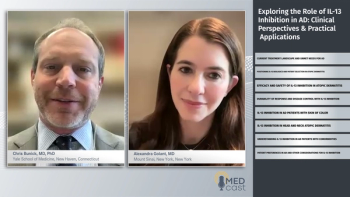
A pair of leading subject matter experts discuss the current landscape of atopic dermatitis, including unmet needs, and the role of IL-13 inhibition in the management.

In this set of interviews, 6 leaders in the field of dermatology highlight their experiences at the 2025 EADV Congress.
A pair of leading subject matter experts discuss the current landscape of atopic dermatitis, including unmet needs, and the role of IL-13 inhibition in the management.

This interview segment with Bunick at EADV highlights some of the significance of these recent findings on cardiovascular risk and upadacitinib use over 6 years.
In this EADV interview, Bunick touches on his team’s findings related to risk of VTE, MACE, and malignancy in patients with atopic dermatitis treated with upadacitinib for 6 years.

Panelists discuss how to effectively onboard patients to Janus kinase (JAK) inhibitors through transparent risk discussions, early follow-up visits at 4 weeks, and personalized treatment approaches that consider patient-reported outcomes and the “3 Cs” (cancer, cardiac disease, clotting disease) while emphasizing the anti-inflammatory benefits and quality-of-life improvements these therapies provide.
Panelists discuss how Janus kinase (JAK) inhibitors demonstrate a favorable safety profile across age groups and comorbid populations, with potential cardioprotective benefits due to their anti-inflammatory effects, while addressing common concerns about the boxed warning by emphasizing that only herpes zoster reactivation, tuberculosis, and nonmelanoma skin cancer show increased rates across all indications.
Panelists discuss how abrocitinib demonstrated superior efficacy compared with dupilumab in head-to-head trials, with 77% of dupilumab nonresponders achieving Eczema Area and Severity Index 75 (EASI-75) after switching to abrocitinib for 12 weeks, supported by real-world registry data showing consistent outcomes across diverse patient populations.

September 23rd 2024


